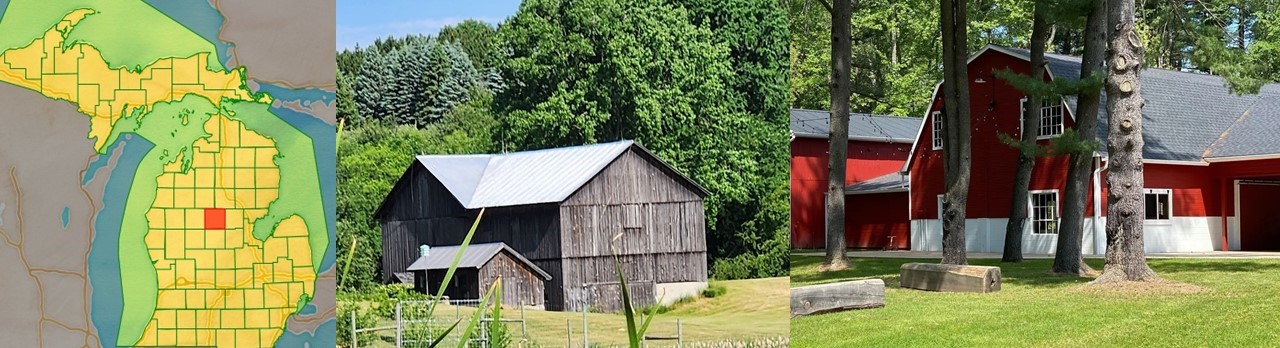
The 2023 fall bus tour in Clare and N. Isabella counties on Oct. 3 included a visit to a rural manufacturing facility, two event venues, a Barn of the Year winner, and two barn sites in various stages of restoration. Participants who arrived the day before enjoyed a traditional Amish dinner at an area farm.
The day started at Lifetime Metal Sales, where the management gave a tour and explained the benefits of using metal siding and roof panels for barn construction.
Tobacco Ranch Event Venue
Location: Clare
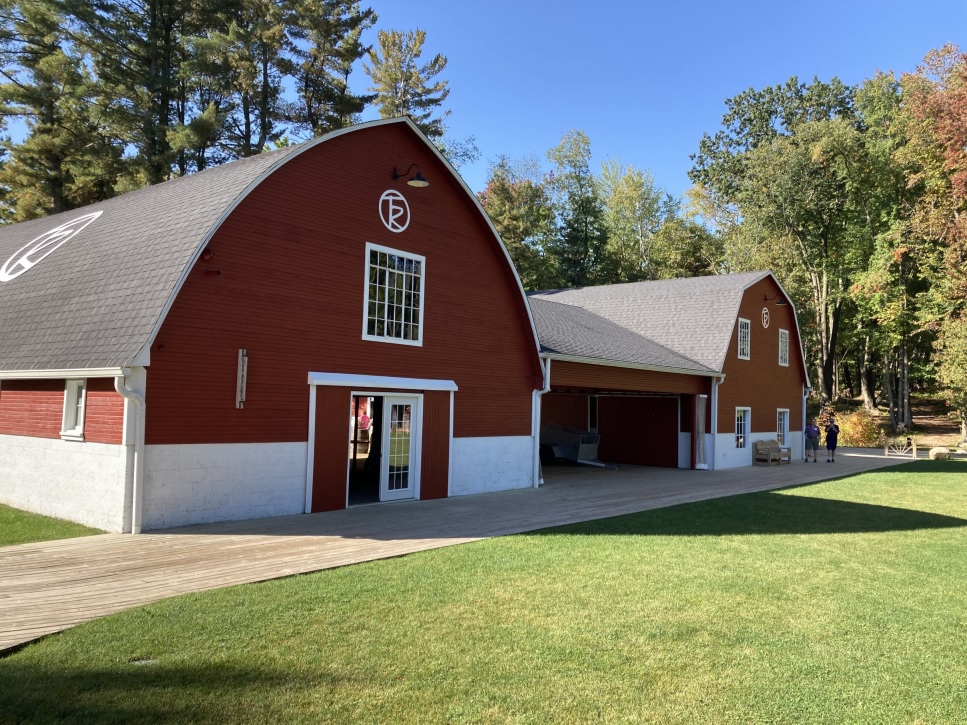
Located near downtown Clare, this wedding and event venue has a fascinating history. The ranch was once owned by Isaiah Leebove, a lawyer who had ties to the infamous Detroit-based Purple Gang in the 1930s. The current owner’s goal was to preserve as much of the ranch’s history and natural features as possible while renovating it to work in the 21st Century.
White Barn Venue
Location: Clare

On Saginaw Road (Old US 10), this curved-rafter barn was built in 1944 by Mr. Randall, a local barn builder. Finding steel for the roof was problematic at the time, since WWWI was in full force, but the project continued.
Owners Ron and Doris Chapman used the barn for dairy cows and in the early 1950s hauled a piano to the haymow floor for community parties. After sitting vacant for a while, the barn was purchased in 2017 by Tony Eberhardt, who intended to store large round bales of hay in it. He tore out the haymow floor and poured a new concrete floor on the first level. Then it was suggested the space would make a good venue for weddings, family reunions and other gatherings. Tony pursued the idea of an event barn and made renovations to meet the codes for public use.
Parsons Barn
Location: Vernon Twp (Isabella County)
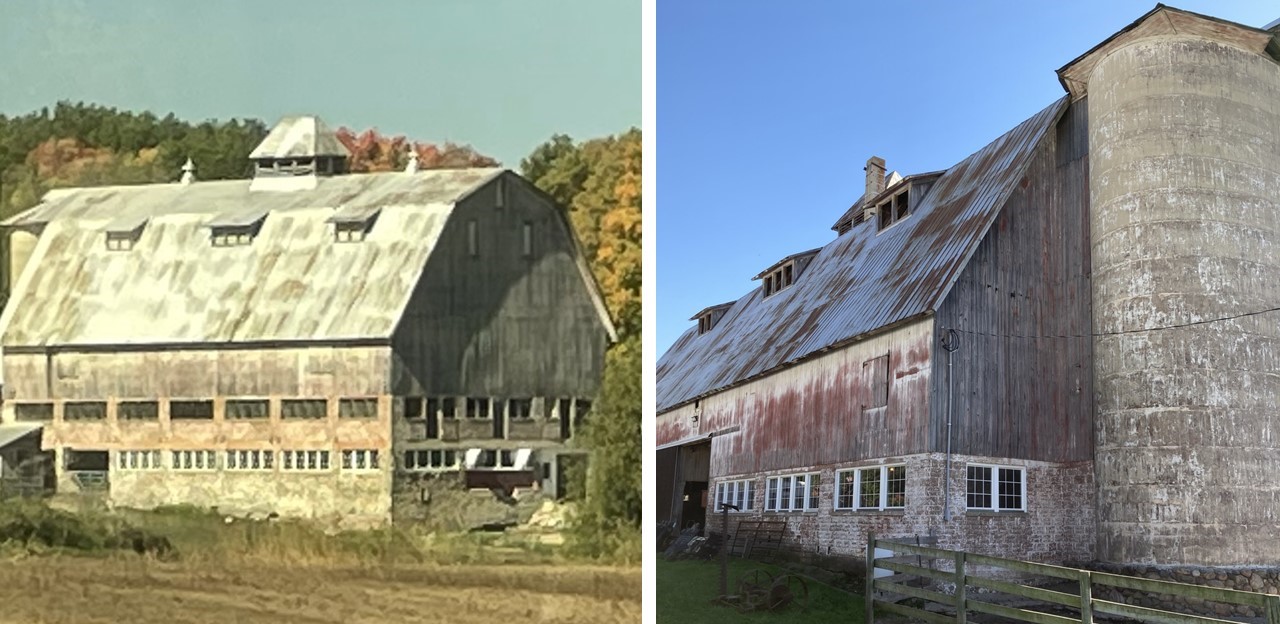
At one time this farm boasted a horse barn, a pig barn, sheep barn and a dairy barn. There were houses for the workers and another barn for them to use. Windmills pumped water, and a cistern on the back side of the barn held rainwater.
Among several early owners, W.E. Currie, a bridge contractor, was the most significant. He purchased the farm in 1886 and built the huge barn in 1914 and 1915, although other structures existed earlier. The 110-foot-long barn and its elliptical silo are very unusual.
Since 1979 the farm has been in the Parsons family. Harold and Grace Parsons purchased it in 1979. Their son Jim is the current owner. He and his son use the barn to store construction supplies and to house a few beef cattle.
O’Grady Barn
Location: Vernon Twp (Isabella County)
Originally from County Clare, Ireland, the O’Gradys immigrated to the US about 1864 after spending a few years in Canada. John and Honora O’Grady homesteaded 180 acres in Vernon Township, Isabella County about 1867. Their first five children were born in their log house, and the youngest was born in the wood-frame house built in 1891. The barn was originally north of the house but was moved by James Leo O’Grady, son of John and Honora. It has six stanchions and two box stalls on the north side and 16 stanchions across the south side.
In 2012, the Dale Brubacker family bought the farm from Ruth Jones, daughter of Leo O’Grady. She had the foundation repaired in 1989 and interior roof work done in 2005. The Brubackers are continuing the restoration of this curved-rafter barn.


Concordia Hills Barn
Location: Farwell (Isabella County)
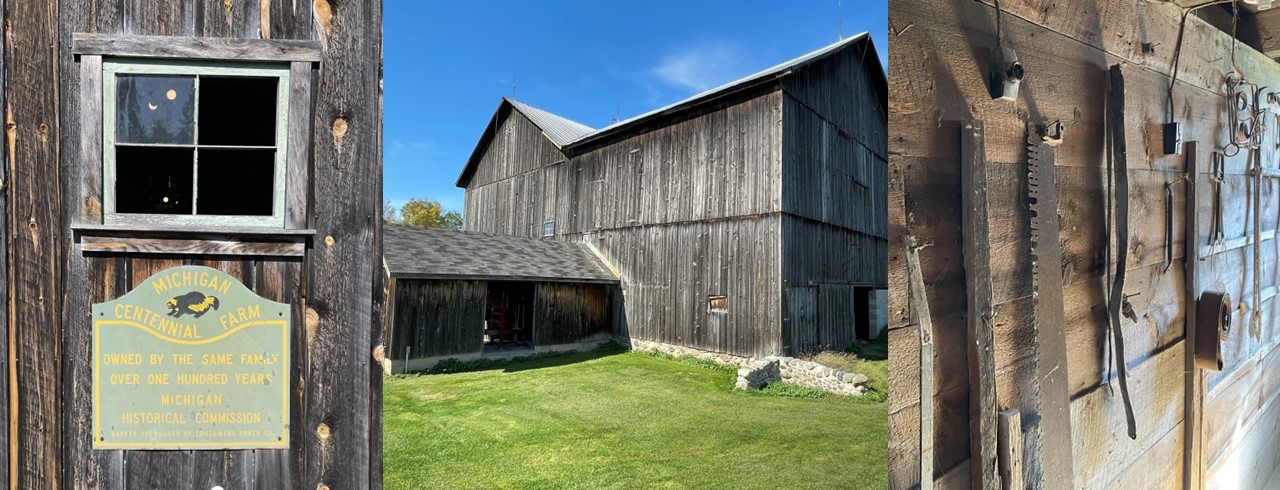
Built in 1884, the barn immediately captures your attention with the weathered patina of its original exterior sheathing and its dressed field stone foundation. It’s been connected to one family for nearly all of its 140-year history. Jim and Michelle Thompson acquired ownership from her family in 2015. In addition to storing hay from the farm, they currently make the barn available for family and community gatherings during the fall apple cider season and the spring maple syrup season.
Named Barn of the Year in 2021 in the Continuing Agricultural Use – Family category, this L-shaped, English-style bank barn is surrounded by hills and marshlands that were created for wildlife. The fieldstone foundation, hand-hewn timbers and small-diameter log rafters speak to its age and various uses over the years. The larger portion has three bays, while the smaller portion has two bays. Rehabilitation efforts have included replacing the wood shingles with galvanized steel, replacing doors throughout, and making extensive repairs to the fieldstone foundation.