A Coveted Prize…
Scroll down to see profiles of the 2026 Barn of the Year Awards.
The Barn of the Year Program annually honors existing barns that support our ongoing mission to preserve Michigan’s agricultural heritage exemplified by its barns. Presented at the MBPN Annual Conference in mid-March, the awards honor barn owners who have made the extra effort to restore historic barns.
Since the award program’s inception in 1997, a total of 116 barns have received the Barn of the Year designation. They are recognized for either their unique character, their historic stories, or the heroic efforts toward saving them for future generations to respect and enjoy.
Award categories cover barns that continue to be used for agriculture and those that are adapted for other uses. They are further subdivided into whether the barn is family-owned or the project of a non-profit or commercial entity.
All nominated barns earn Great Michigan Barn status for the owners’ efforts to faithfully rehabilitate and maintain their barn. Some years, the judges also give the Founders Award to deserving individuals.

Winner Profiles
Continuing Agriculture—Family
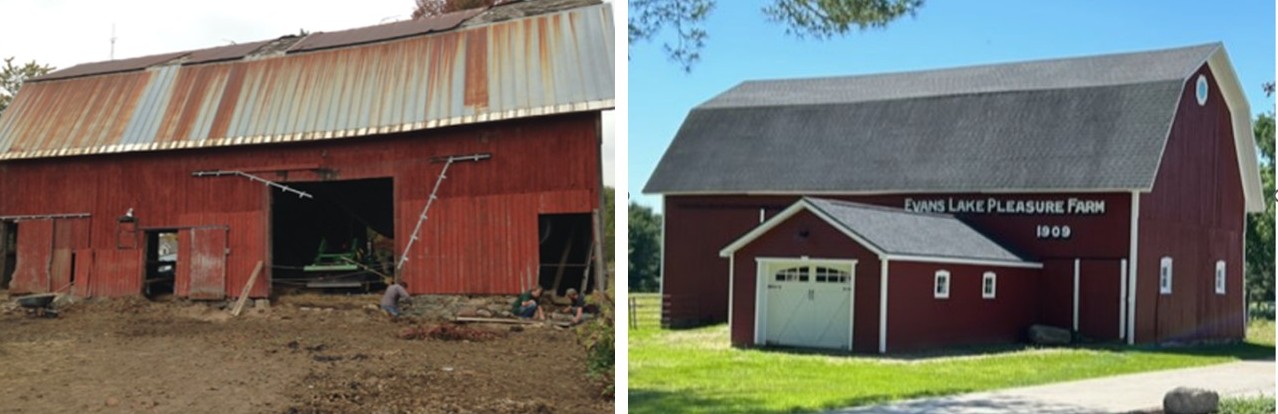
Before and After– Left: Evans Lake Pleasure Barn renovation in progress on the rehabilitation that took 20 years to complete. Right: The barn today with the new shed attached and lettering restored.
Evans Lake Pleasure Farm Barn
Owner/Applicant: Kristi Cymes
Location: Tipton, MI (Lenawee County)
Date Built: c. 1875
Description: This 30 x 60 feet, gambrel-roofed barn is situated on a hill overlooking Evans Lake in the Irish Hills near the Old Sauk Trail (now the US12 Heritage Trail). Our barn-loving owner carefully relettered “Evans Lake Pleasure Farm – 1909” which for many years had been covered due to the old shed addition. During much of the past century, the farmstead was a ‘summer resort’ where folks from town could row across Evans Lake for fishing, boating and lodging.
Use: This barn has always housed animals (horses and goats today) and stored hay and farm equipment.
Restoration: When acquired by its current owners nearly 25 years ago, its condition was seriously debilitated, but was said to have “good bones.” It took 20 years to restore—there were extensive repairs to its roof (note the asphalt shingles), framing, fieldstone foundation, doors, windows and a complete replacement of the front addition in conjunction with the rehabilitation.
Adaptive Use – Family/Private
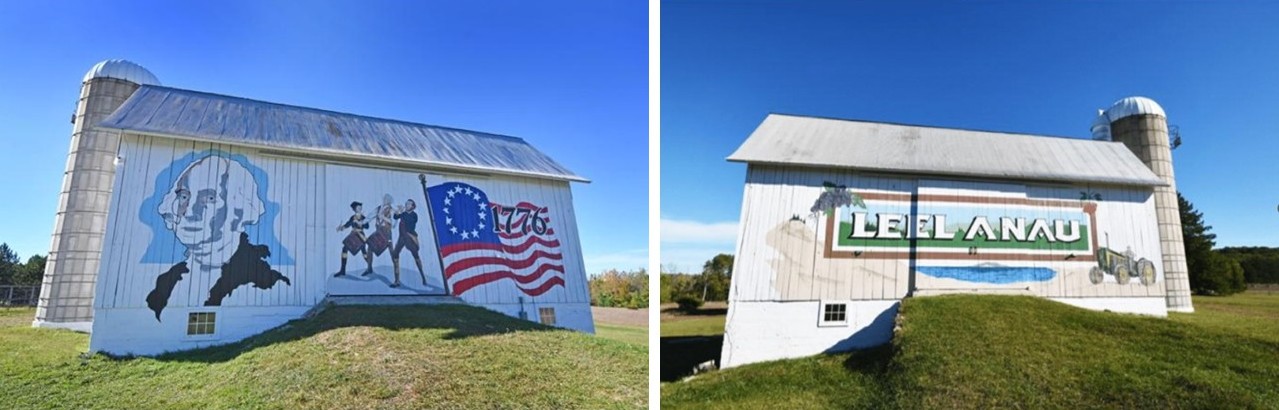
The Bicentennial Barn in Leelanau County on M-22 at Bohemian Road in the Sleeping Bear Dunes National Lakeshore district was repainted on both sides for the 250th anniversary of American independence.
The Bicentennial Barn
Owner/Applicant: Scott and Tamara Stone
Location: Maple City, MI (Leelanau County)
Date Built: 1915
Description: This gambrel roof, timber-framed bank barn measures 30’ x 45’ with two massive 12’ sliding doors on both the front and back. For the past 50 years, this iconic barn has been known as the “Bicentennial Barn” with murals painted on it in1976 to celebrate the nation’s 200th birthday.
Use: Family and community gatherings
Restoration: When the current owners obtained the property in 2024, the structure needed much attention inside and out due to lack of maintenance over the decades. They removed three dumpster’s worth of debris and replaced all four 12’ sliding doors and their tracking systems. They also launched a community project to repaint the art murals in time for the United States Semiquincentennial (America 250) celebration.
Adaptive Use – Family/Private
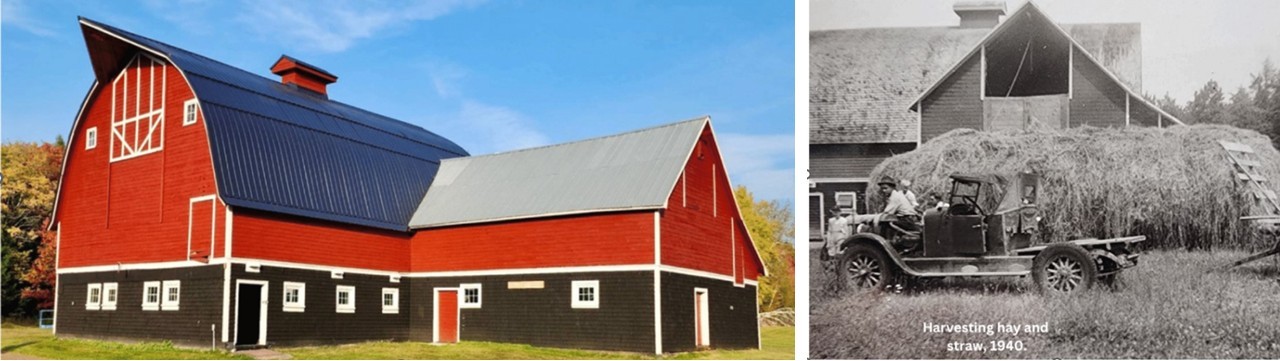
Left: The Kangas Farm Barn in the Upper Peninsula with its newest makeover. Right: An archival photo of how it looked in 1940.
Kangas Farm Barn
Owner: Nancy Kangas
Applicant: Diane Kangas (daughter)
Location: Ontonagon, MI (Ontonagon County) – Built in the farthest isolation of the Upper Peninsula, it remains in the wilderness still today, at the end of a mile-long dirt road.
Date Built: 1927
Description: The barn’s most unique physical feature is the curved framing supporting the entire curvature of the roof. Its footprint is 34’ x 52’ with a wing addition which is 24’ x 28’. The Finish immigrants who settled the farmstead 120 years ago timbered hemlock from their 160-acre property, milled the wood and constructed the barn using mail-order building plans from Jamesway. This Wisconsin company, known for developing energy-efficient and sustainable farm buildings in that era, provided a cupola and ventilation system in the design.
Use: Was a dairy barn until 1980. Today the first floor houses the farm’s “toys” and a workshop. The loft is the playground for family get-togethers and includes a museum of antique farm equipment and family heirlooms.
Restoration: The third generation of the family undertook the first major rehabilitation on the old barn in 2000, followed by a second rehabilitation 21 years later. In both cases, rafters in the barn were big concerns because the roof had evidence of sagging from age and the heavy seasonal snow loads which could amount to 200 inches a year. The fourth generation family member who submitted this beauty for consideration said, “Our family’s homestead barn has lovingly been given a makeover.”
Adaptive Use – Commercial
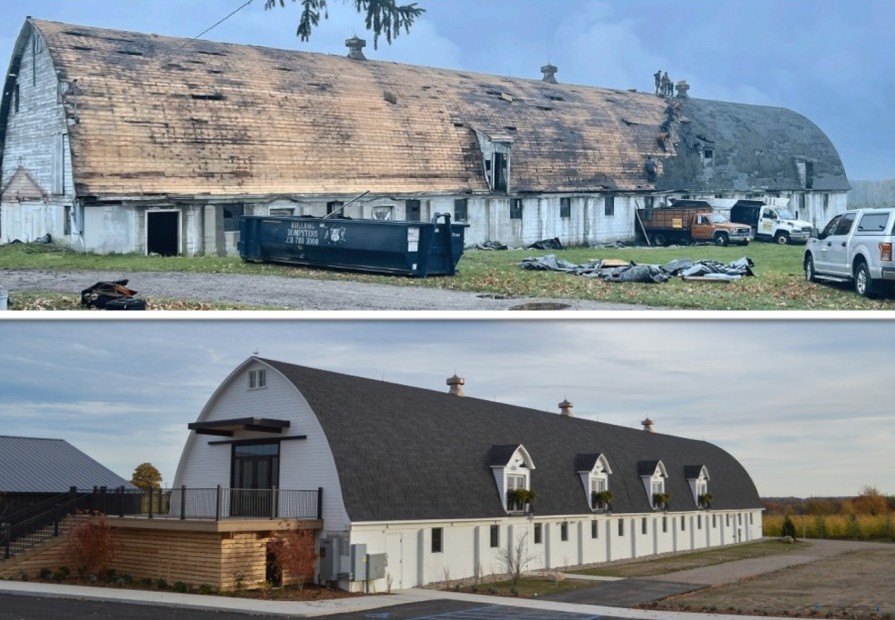
Before and After: The Casnovia Barn with its 180-foot-long soaring Gothic-arched roof required massive rehabilitation work.
The Casnovia Barn
Owner/Applicant: Sunni & Gunnar Nyblad
Contractor: American Heritage Barn Preservation
Location: Casnovia, MI (Kent County)
Date Built:1956
Description: This striking, massive cinderblock structure is 180 feet long with a soaring Gothic-arched shingled roof. While it’s not an ‘old’ barn by the standards we normally use to judge, its striking architecture and size made have made it a beloved local landmark over the decades
Use: For half its life, it served as a successful dairy operation—the lower level for milking cows and the upper level stuffed with hay. Today, fully restored, it serves as a community venue for weddings, celebrations and local events.
Restoration: When acquired by the new owners nine years ago, the barn was considered unsalvageable. Undaunted, they decided to proceed with the massive rehabilitation work that would cost in excess of $1 million. While the cinderblock structure was largely stable, 80% of its roof structure was rotted and had to be replaced—including its arched timbers, rafters, shingles and underlying sheathing. Also, the upper level hay floor had to be removed and replaced with oak hardwood flooring. Additional dormers with balconies were constructed for light and outdoor views. The owners partnered with American Heritage Barn Preservation for repair of many of its core structural elements.
Adaptive Use – Commercial
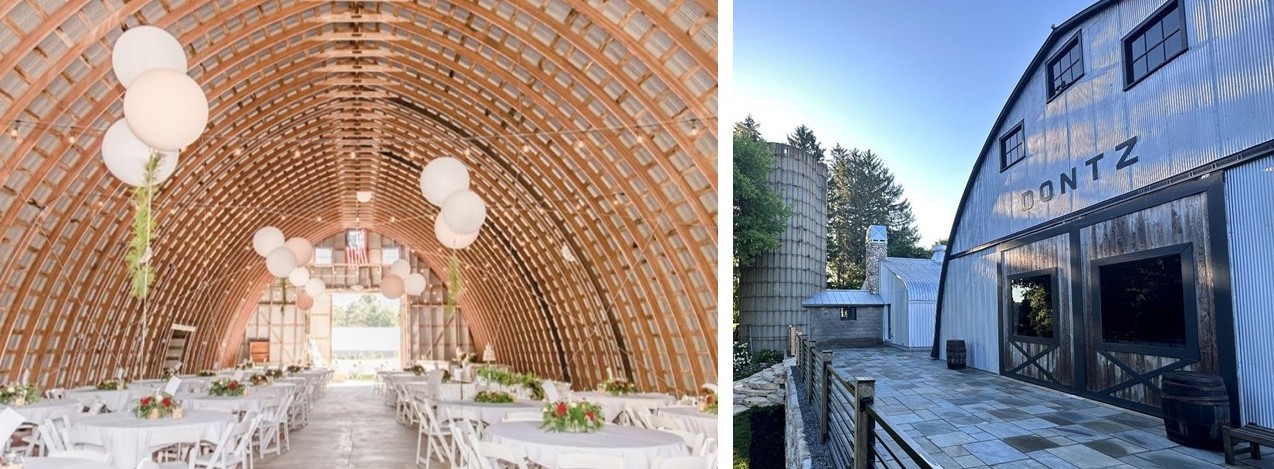
The 40’ x 90’ Quonset-style barn at LakeStar Farms now hosts lavish wedding parties. It has original exposed timber framing—45 interior laminated beams, as well as sliding doors that open to reveal the arched roof inside.
LakeStar Farms Barn
Owner/Applicant: Adam L. Dontz
Location: Manistee (Manistee County)
Date Built: 1941
Description: This is a multigenerational Michigan Centennial Farm incorporating two historic barns. The 20’ x 40’ barn that once housed a herd of 60 guernsey cows was constructed in 1941 using Jamesway dairy system building plans. A 40’ x 90’ Quonset-style barn was added in the 1950s for hay storage.
Use: The property, which from the hilltop has views of Lake Michigan, is now a wedding venue. Half of the dairy barn has been transformed into a farm-chic “dairy cottage,” comfortably accommodating 8 overnight guests. Even the original milkhouse has been preserved and retrofitted into a cigar and beverage lounge. Guests who attend lavish social events there will still see the original stanchions and a display of museum-quality milking equipment.
Restoration: By the time the comprehensive, multi-year restoration was initiated, the barns were blighted from lack of maintenance for nearly 17 years. In the decade since, restoration efforts focused on creating modern-day amenities for events, while still preserving the look and feel of the property’s agricultural and family heritage. For instance, great care was taken to preserve the original exposed timber framing—45 interior laminated beams, as well as the sliding doors that open to reveal the arched roof inside. All of this done to showcase its craftsmanship and reinforce its architectural and historical integrity.
Non-Profit Adaptive Use
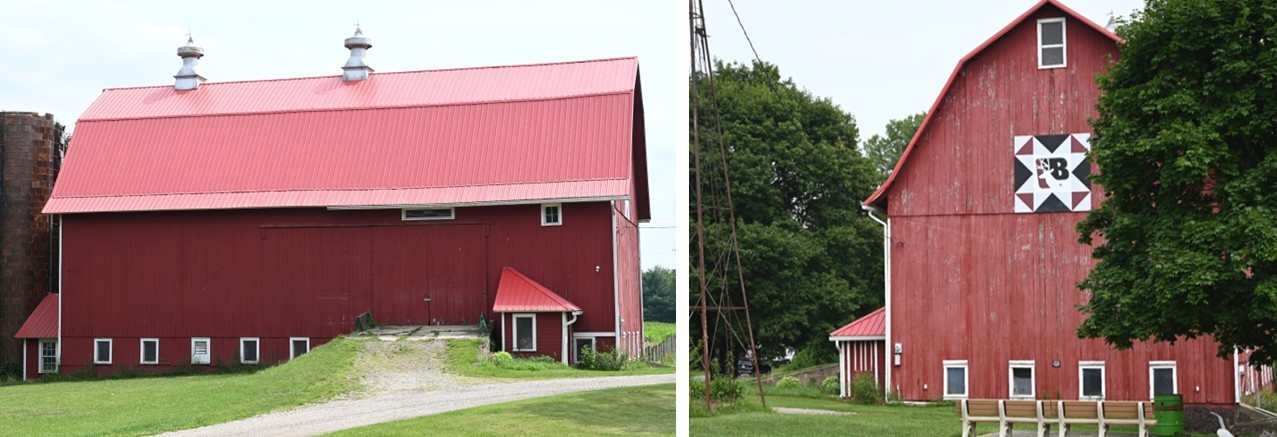
Buchanan Community Schools is one of a handful of public K-12 districts in Michigan that operate a school farm. Hands-on learning opportunities for students in kindergarten through fourth grade include planting seeds, harvesting pumpkins and tapping maple trees.
Buchanan School Farm Barn
Owner: Buchanan Community Schools
Submitted by: Monica Luke & Melissa Frost
Location: Buchanan (Berrien County)
Date Built: Exact construction date unknown but in the 1890-1920 period
Description: Typical of the time period, the Buchanan Barn has hand-hewn timber framing, original wood flooring, a concrete foundation, large sliding doors front and back for entrance to the threshing floor and original vertical pine wood siding. Two original cupolas provide ventilation.
Use: Today, the barn is the centerpiece of the school farm used for field trips and hands-on learning experiences. Students take part in the planting, harvesting, corn shelling, apple picking, cider making, maple syrup tapping and composting.
Restoration: In 1973, the property on which the former dairy barn stands was acquired by the Buchanan School system to build a middle school on a portion of the property. In the following year, the Buchanan School Farm was established. In 1982 a one-room school house was moved onto the property to make the site a living history museum. The School District has been diligent in maintaining the structure, replacing its shingled roof with a standing-seam steel roof. They erected a large quilt block adorned with the school farm logo and used a specific tint called “Buchanan Red” to paint the barn. Sadly, just last year the iconic glazed-tile silo had to be removed due to safety concerns.
Great Michigan Barns
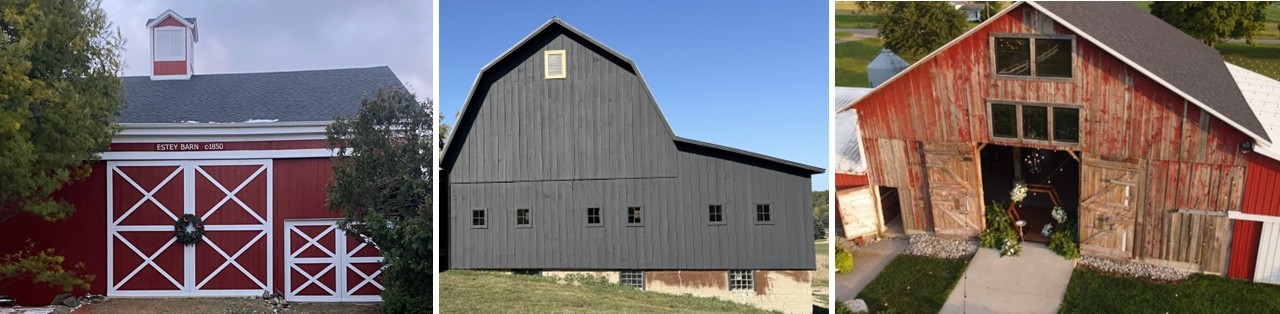
(L to R) Estey Bary in Ann Arbor, Castle Barn in Owosso and Byre 53” (Red Shed) in Hudsonville
Although not selected to the top awards this year, we are recognizing three other barns that have been saved, maintained or lovingly restored. They demonstrate the passion that barn owners have for the mission of preserving these iconic structures. We are pleased to honor the owners of these “Great Michigan Barns.”
- Paul F. Thompson of Ann Arbor for the “Estey Barn.”
- Chad Stitt of American Heritage Barn Preservation, who restored the “Castle Barn” in Owosso.
- Ron DeHaas, owner of the “Castle Barn” in Owosso.
- Rick & Matthew Lubbers of Hudsonville for the “Byre 53 Barn” and the “Red Shed.”
Here’s How to Enter Your Barn
You are invited to nominate your barn or a neighbor’s for the awards which are presented at the MBPN Annual Conference. To be eligible for consideration, the barn must be in-use, either for continued agricultural purposes or adapted for other uses. Barns must retain their overall appearance — both in their interior and exterior barn characteristics.
Categories
- Continuing Agricultural Use – Family (Private), Non-Profit or Commercial
- Adapted to Other Uses – Family (Private), Non-Profit or Commercial
Evaluation
Nominated barns are judged on (1) completeness of information presented in the application, (2) sensitivity and integrity of repairs or modifications, (3) visual appeal, (4) creativity, (5) thoroughness of work and (6) effort expended to repair and maintain.
Application Components:
Four items are required for the submission:
- A completed application form
- A written narrative
- Photographs (24 maximum)
- Michigan Barn & Farmstead Survey form filled out on application
Click here for sample application form with detailed instructions.
Application materials may be scanned and e-mailed to: klanderson42@gmail.com or via a thumb drive mailed to:
MBPN Barn of Year Committee
11530 Peach Ridge Ave.
Sparta, MI 49345
For questions, contact the program chairman, Keith Anderson. E-mail: klanderson42@gmail.com or Mobile: 616-540-6701.
Nominations for 2026 are now closed. The next window for submitting applications will be
Nov. 1, 2026 through Jan. 31, 2027.
Past Winners
Click here for database of Barn of the Year winners from 1997 to 2016. Also see showcase of winners in 2017, 2018, 2019, 2020, 2021, 2022, 2023, 2024 and 2025.